Changing Landscapes, Changing Skies: An Oral History of Land Use and Bird Life in Siouxland
A series of collaborative interviews with KWIT-Siouxland Public Media, Dr. David Hoferer, Northwest Iowa Group of Sierra Club, and the Loess Hills Audubon Society.
Interview with long-time Birder Bob Nikolson
friday, july 17, 2026
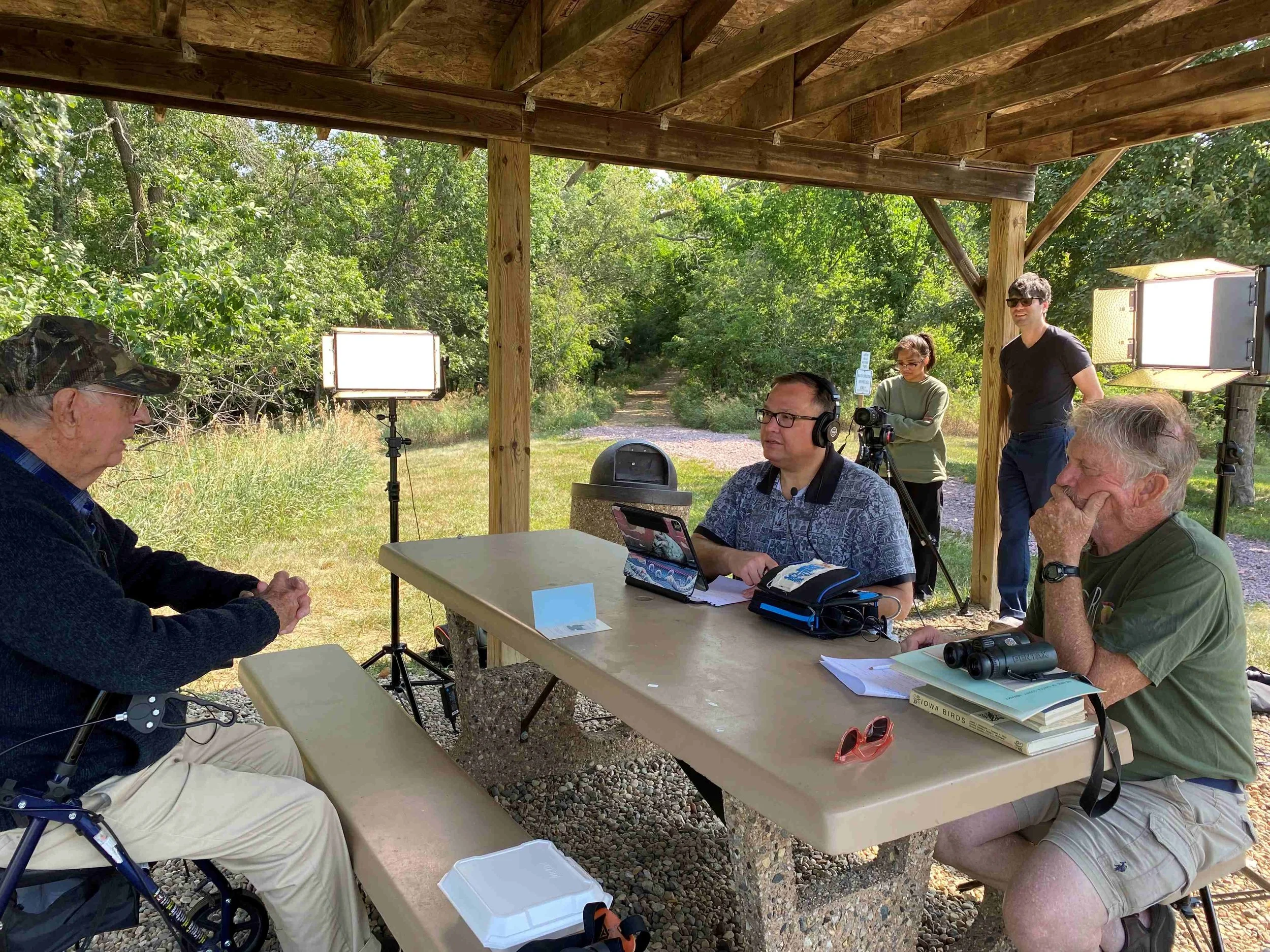
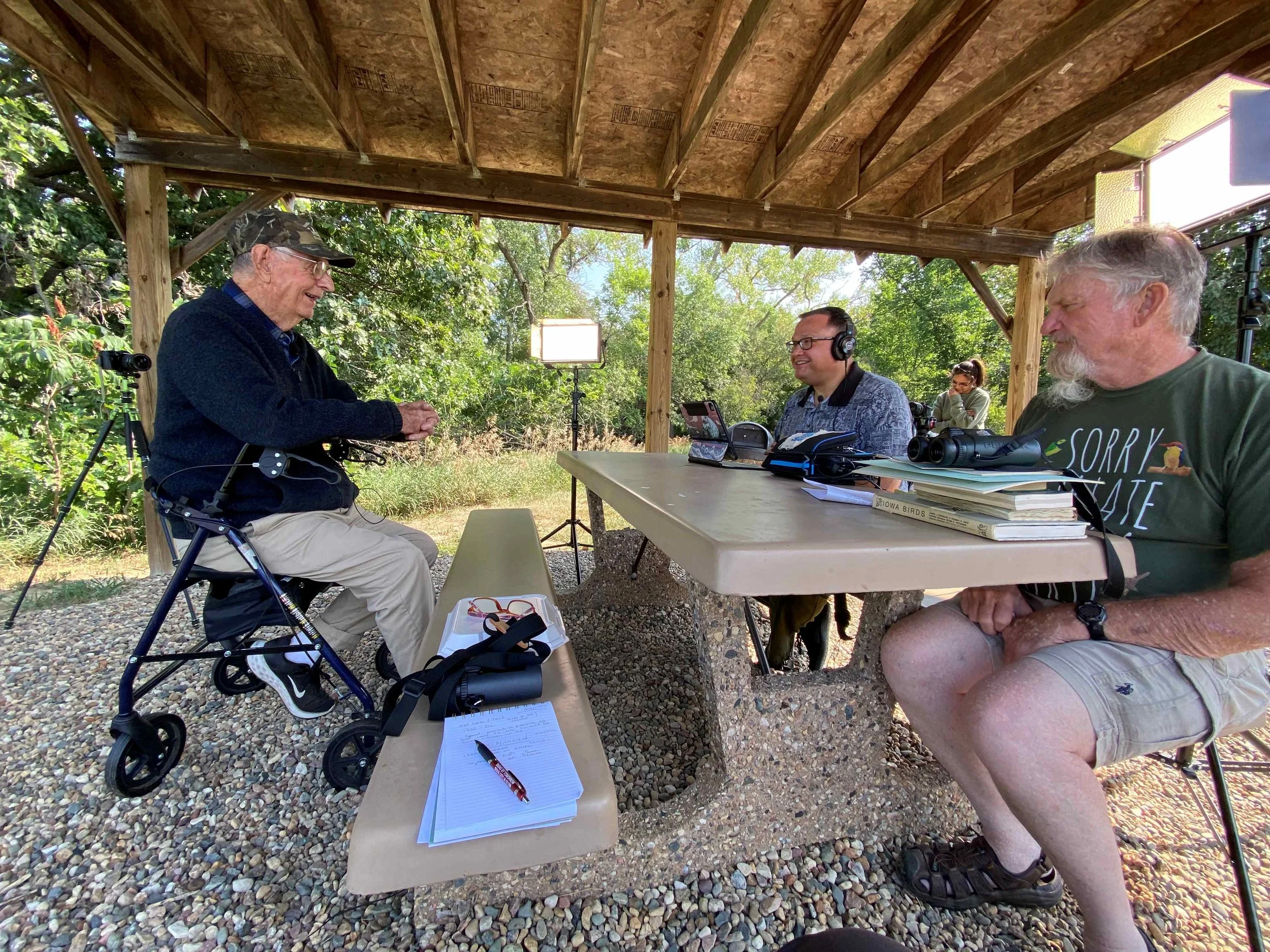
For eight decades, Bob Nickolson has followed birds across fields, marshes, back roads, and changing seasons. His memories trace not only a lifetime of birding, but also a record of how northwest Iowa’s landscape has changed around the birds he loves.
Bob Nickolson may be Iowa’s oldest active birder and the longest-living member of the Iowa Ornithologists’ Union. Born in the early 1930s in Clark County, South Dakota, Bob grew up with a love of the outdoors. One of his favorite childhood memories is hearing chickadees call. He remembers watching ducks and geese with his dad and noticing birds while working in the fields. Though he says he “wouldn’t be called an expert,” Bob has been birding for about 80 years and still tries to go car birding several times a week.
Bob began birding as a hobby at age 14 after meeting Zell Lee, a co-worker of his sister at Toy Bank in Sioux City. Zell, then president of the Sioux City Bird Club, became a true inspiration and introduced Bob to the larger world of organized birding. Bob took part in Bird Club meetings and outings, used Peterson’s as one of his early field guides, joined the Iowa Ornithologists’ Union in 1949, and attended IOU conventions. In 1950, he married Phyllis, his favorite birding partner. She was not a birder at first, but through Bob she became involved, and birding became an activity they deeply enjoyed together on their travels. Bob lost his wife in early 2026.
That long perspective made Bob’s July conversation especially meaningful. Speaking with local conservation, media, and birding leaders, he connected personal memories with broader changes in habitat, water, and migration patterns across the region.
On July 17, Bob met with Dr. David Hoferer, Professor of Biology at Briar Cliff University and executive committee member of the Northwest Iowa Group of the Sierra Club; Mark Munger, general manager of KWIT–Siouxland Public Media; Alejandra Perez, reporter for KWIT–Siouxland Public Media; Bill Huser of the Loess Hills Audubon Society; and Marla Kerr of the Loess Hills Audubon Society.
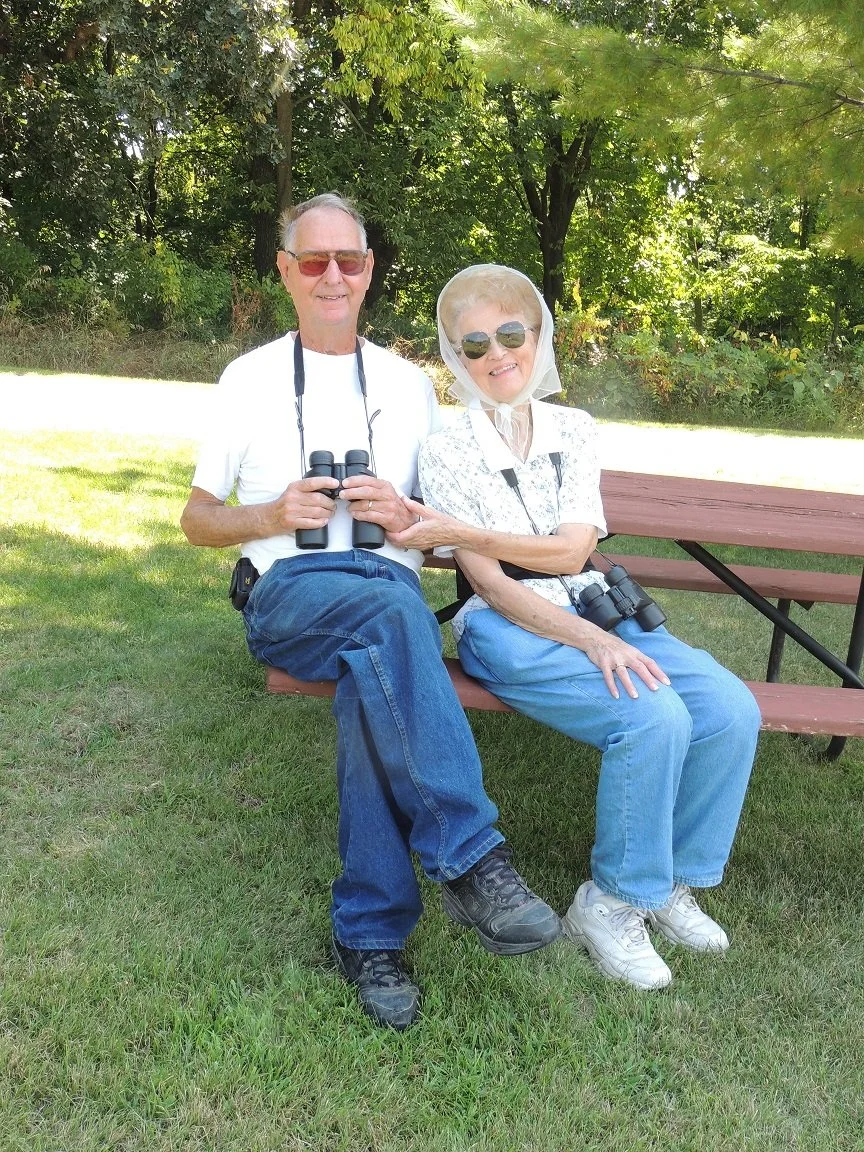
Bob and Phyllis Nikolson, copyright 2026 by Jan Null, used with permission
Observations about environmental changes over the years and their effects on area wildlife were discussed. He remembered Evening Grosbeaks as winter birds, trees filled with migrating warblers, and Black-billed Magpies in the Broken Kettle Grasslands.
Bob also talked about the Hornick-Luton area, where water has dried up in places that once held large marshes full of migrating Snow Geese. When the geese took flight, they filled the skies over Sioux City. Browers Slough south of Sergeant Bluff, New Lake, Sand Lake, and Badger Lake have all dried up, but they once provided important resting places for waterbirds and shorebirds during migration.
Bob’s memories are more than stories from a lifetime outdoors. They are reminders of what has been lost, what still remains, and why careful attention to birds and habitat continues to matter in northwest Iowa.
This interview is part of a series of collaborative interviews with KWIT-Siouxland Public Media, Dr. David Hoferer, Northwest Iowa Group of Sierra Club, and the Loess Hills Audubon Society. Video and Recorded excerpts will be available from KWIT-KOJI Siouxland Public Media at a future date.